
Professional shampoo: the clear guide for salons (2026)
Choosing a professional shampoo is not about choosing a fragrance: it is about choosing a cleansing agent, a pH and a concentration suited to the hair in the basin. A badly chosen shampoo undoes a treatment, dulls a fresh colour or leaves the roots greasy again within two days. This guide explains what really sets a professional product apart, which shampoo to use for which hair type, and how to dose and work at the backwash so the result shows from the blow-dry onwards.
What sets a professional shampoo apart?
Three things, mainly:
- The concentration of actives: a professional shampoo is more concentrated, so it is used in smaller amounts. The cost per service is often lower than with a retail product.
- A controlled pH, generally between 4.5 and 5.5, close to that of the scalp, which closes the cuticle rather than opening it.
- Range consistency: shampoo, conditioner and mask are formulated to work together, which makes retail advice far simpler.
Which shampoo for which hair type?
| Hair type | Shampoo to choose | Watch out for |
|---|---|---|
| Greasy roots | Purifying, light cleansing base | Do not strip: it restarts sebum production |
| Dry or damaged hair | Nourishing, rich in lipids | Alternate with a gentle shampoo to avoid a heavy feel |
| Coloured hair | Colour protection, acidic pH | Avoid harsh cleansing bases that wash the colour out |
| Blonde and grey | Silver shampoo (violet pigments) | Short, controlled development, otherwise a blue cast |
| Curly hair | Sulphate-free, moisturising | Emulsify for longer, the lather is more discreet |
| Sensitive scalp | Soothing, short formula | Rinse with lukewarm water, never hot |
| Beard | Dedicated beard shampoo | Hair shampoo dries out the beard and facial skin |
For barbering services, the routines are set out in detail in our guide to beard care in the barbershop.
Sulphates, silicones and “free from” formulas: what to know
Sulphates are effective, inexpensive cleansing agents. They are not dangerous, but they clean hard: on coloured, curly or very dry hair they speed up fading and dryness. Sulphate-free formulas clean more gently, lather less and often need two applications.
The same logic applies to silicones: they smooth the fibre and make detangling easier, but they build up if the hair is never washed with a clarifying shampoo. Good salon practice is alternation, not prohibition: a clarifying shampoo once or twice a month is enough to reset the fibre before a treatment or a technical service.
Why pH matters so much
Hair and scalp are naturally acidic. A product that is too alkaline opens the cuticle: the fibre becomes rough, dull and porous. After a colour or a bleach, both of which work in an alkaline environment, an acidic shampoo and treatment close the cuticle and lock in the result. It is the step most often rushed at the end of a technical service, even though it determines how long the colour lasts: see our guide to blonde and bleaching in the salon.
At the backwash: dosing and rinsing
- Wet thoroughly: poorly wetted hair needs twice as much product.
- Dose 5 to 10 ml depending on length, into the palm, then emulsify with a little water before applying.
- Two shampoos when the hair is loaded: the first cleans, the second actually works.
- Massage the scalp with the pads of the fingers, never the nails, for 1 to 2 minutes.
- Rinse with lukewarm water, and rinse fully: shampoo residue weighs the hair down and itches.
- Move straight on to conditioner or mask, on towel-dried hair, avoiding the roots.
How many different shampoos does a salon need?
A base of four to six items covers the essentials: a gentle all-rounder, a colour protector, a nourishing one, a silver shampoo, a purifying one and a clarifying one. Multiplying items ties up cash and complicates advice. Better to have few products you know well, ordered in salon format from one supplier: see how a wholesale account in Switzerland works.
Retailing without pushing the sale
Retail works when it extends the service rather than being bolted onto it. The principle is simple: the client leaves with the product she felt at the backwash, explained in one concrete sentence (“this one keeps your cool tone between appointments”). Stock the home-size version of the item you use at the basin, mention it during the treatment rather than at the till, and suggest only one: beyond that, advice turns into a sales pitch. A well-run in-salon treatment remains the best trigger: our item on treatment protocols to offer in the salon sets out this approach.
At the backwash: applying professional shampoo without waste
A good product badly applied gives an average result. At the backwash, three parameters decide everything: the amount of water, the dose of product and the length of the massage. Many salons use twice as much as they need because the hair starts off poorly wetted. The protocol below applies to any professional shampoo, whatever the brand.

- Wet for at least 30 seconds, down to the ends, with lukewarm water. Hair saturated with water needs almost half as much product.
- Dose into the palm, never straight onto the head. A hazelnut for a bob, a generous hazelnut for lengths.
- Emulsify with a little water before applying: the shampoo spreads instead of staying concentrated in one spot.
- Apply to the scalp, not the lengths. The lengths are washed by the lather running down during the rinse.
- Massage for 60 to 90 seconds with the pads of the fingers, in slow circles, from the nape to the forehead.
- Rinse until the hair squeaks, then squeeze out by hand before moving on to the treatment.
One shampoo or two?
Double shampooing is not automatic. The first pass removes the film of sebum, dust and styling product. The second really works on the fibre and the scalp. On hair washed the day before, one pass is enough. On hair loaded with texturising powder or hairspray, double shampooing is essential: without it, the mask that follows sits on the surface and the colour takes badly.
The massage is part of the service
An extra minute of massage costs nothing and changes how the appointment is perceived. It is also what makes a client associate your professional shampoo with a specific sensation. Retailing at the counter then becomes obvious rather than a sales argument.
Dosing, cost per client and budget
The price per litre means nothing on its own. What counts is the cost per head. A professional shampoo is concentrated, so it is used in small amounts: its real cost per client often falls below that of a supermarket product, for an incomparable quality of wash.
Based on a one-litre bottle at 30 CHF, that is 0.03 CHF per millilitre, here are the orders of magnitude seen in salons.
| Service | Total dose | Heads per litre | Product cost per client |
|---|---|---|---|
| Short hair, one pass | 5 ml | 200 | 0.15 CHF |
| Bob, one pass | 8 ml | 125 | 0.24 CHF |
| Mid-length, double shampoo | 14 ml | 71 | 0.42 CHF |
| Long, double shampoo | 20 ml | 50 | 0.60 CHF |
| Long and thick, double shampoo | 28 ml | 36 | 0.84 CHF |
The washing line item therefore costs less than one franc per client in almost every case. The real saving is not the purchase price of the shampoo, it is over-dosing and product that goes down the drain. A pump dispenser screwed onto the litre bottle solves the problem within a week.
To gauge the initial investment for a complete backwash range, here is an indicative bracket in Swiss francs, before wholesale discounts.
| Item | Size | Indicative budget |
|---|---|---|
| Gentle all-round shampoo | 1 litre | 25 to 35 CHF |
| Colour protector | 1 litre | 30 to 45 CHF |
| Nourishing or repairing | 1 litre | 32 to 48 CHF |
| Silver shampoo | 1 litre | 28 to 42 CHF |
| Clarifying | 500 ml to 1 litre | 25 to 38 CHF |
| Purifying for greasy scalp | 1 litre | 28 to 40 CHF |
Allow 170 to 250 CHF to equip the backwash with six professional shampoo items. That budget pays for itself within weeks, especially if the same lines are offered in home sizes. The complete ranges are gathered in our professional shampoos section.
Silver, pigmented, clarifying: the technical shampoos
Three families fall outside everyday washing. They do not replace the basic professional shampoo, they are added to it to solve a specific problem of tone or build-up.
Silver shampoo
Silver shampoo deposits a violet pigment that optically neutralises the yellow cast of blondes, greys and highlighted hair. It does not nourish the fibre, it corrects a colour perception. Development time is counted in minutes and must be watched, especially on porous hair that absorbs the pigment very quickly. A silver shampoo is used on average once a week at home, and at the basin right after rinsing a bleach to set the tone.

Colour-pigmented shampoos
Beyond violet, pigmented shampoos exist in red, copper, brown, gold or blue. They revive a tone between colour appointments, they do not colour. On a light base they show quickly; on a dark base the effect stays discreet. Always tell the client which shade you are using before applying, otherwise disappointment is guaranteed. The detail on tones and developers is in our professional hair colour guide.
Clarifying before a technical service
Clarifying shampoo removes build-up: silicones, minerals from hard water, styling residue. It resets the fibre before a colour, a bleach, a straightening service or a deep treatment. It also removes the natural protective film, so it is used the day before or at the very start of the session, never on an irritated scalp. Once or twice a month is enough for maintenance. The structure of the fibre and how it behaves with water are well summarised on the reference page on hair.
Greasy or sensitive scalp, coloured hair: adapting the shampoo
The diagnosis is made on the scalp, not only on the lengths. Two clients with the same colour may need two different products. Here are the most frequent situations at the backwash and the shampoo choice that goes with them.
| Situation observed | Shampoo choice | Associated technique |
|---|---|---|
| Greasy roots, dry ends | Purifying at the roots, nourishing on the lengths | Two products on the same head, applied separately |
| Tight, uncomfortable scalp | Soothing formula, gentle cleansing base | Lukewarm water, light massage, long rinse |
| Visible dandruff | Cosmetic anti-dandruff shampoo | Refer to a health professional if it persists |
| Fresh colour, less than 15 days old | Colour protector with acidic pH | One pass only, cooler water |
| Bleached and porous hair | Rebuilding, then a mask | Do not rub the lengths |
| Extensions and wigs | Sulphate-free, no heavy silicones | Wash in the direction of the weft |
On a greasy scalp, the temptation is to strip. That is the classic mistake: a cleansing base that is too strong dries the surface and sebum production comes back stronger. A purifying professional shampoo, alternated with a gentle one, gives better results over three weeks than an aggressive product used daily.
On coloured hair, the rule is to wait 48 hours after the service before the first home wash, then to space out shampoos. A colour protector does not fix the pigment, it slows fading by closing the cuticle. Combined with an acidic conditioner, a colour-protecting shampoo buys two to three extra weeks of visible hold. The finishing products that complete the routine are covered in our guide to styling products.
Litre size, refills and building the salon range
The salon size changes the economics. A litre costs proportionally less than a 250 ml bottle and reduces the number of orders. Some brands also offer 1.5 or 5 litre refill pouches, which lower the cost per millilitre further and cut packaging.
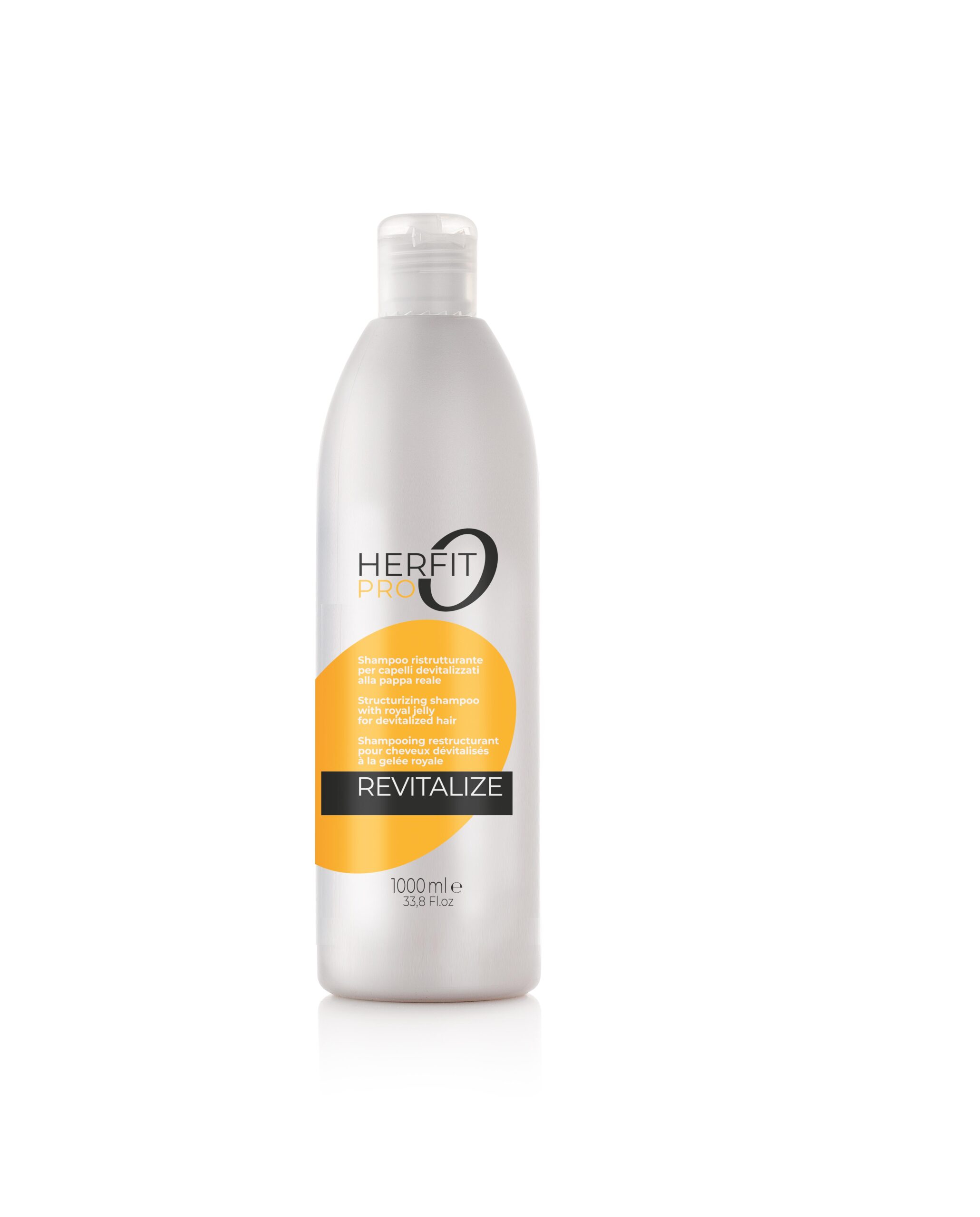
Three simple rules to avoid mistakes when ordering:
- A litre at the backwash, a home size at the counter. The client must be able to buy exactly the shampoo she felt during the service.
- One main brand only. Multiplying suppliers complicates restocking and muddles the team’s advice.
- Four to six items, not twelve. Beyond that, cash sits on the shelf and staff hesitate at the basin.
The minimum range that covers the vast majority of heads is six products: a gentle all-rounder, a colour protector, a nourishing one, a silver shampoo, a purifying one and a clarifying one. You then add according to the salon’s real clientele: curls, beards or very fine hair. The developers, powders and accessories that go with technical services are in the technical products section.
Organisationally, the backwash stays tidy if every litre carries a dispenser and a legible label. Teams work faster, apprentices make fewer mistakes, and shampoo consumption becomes predictable month to month. That regularity is what lets you negotiate quantities with a wholesaler instead of ordering in a rush.
Counter retail and common mistakes at the backwash
Retail is not a different job, it is the logical continuation of the diagnosis. A client who leaves without a product will wash her blow-dry out with shower gel or a very alkaline detergent, and your work will last three days. A professional shampoo sold at the counter extends the service and secures the next appointment.
- Mention the product at the backwash, not at the till. The right moment is when the client feels the texture and the scent.
- One sentence, one benefit. For example: this one keeps your cool tone between appointments.
- One suggestion only. Two products suggested is a pitch; one is advice.
- Show the dose. A hazelnut is enough: the client understands the bottle will last three months and the price stops being an obstacle.
The mistakes that come up most often are well known and easy to correct as a team.
- Washing with water that is too hot, which opens the cuticle and dulls fresh colour.
- Applying the product to barely damp hair, which triples the dose needed.
- Rubbing the lengths instead of letting the lather run down during the rinse.
- Rinsing too quickly: residue weighs the fibre down and makes the scalp itch.
- Using the same professional shampoo for the whole clientele, from greasy scalps to bleached hair.
- Leaving a silver shampoo on without watching the time on porous hair.
- Forgetting the dispenser, which makes cost control impossible.
Ongoing training remains the best investment in these habits, because they are quickly forgotten. Trade bodies such as Coiffure Suisse publish short modules that refresh backwash protocols, including for apprentices. A salon that trains its team on professional shampoo sees the difference in its retail rate before it even changes brand.
FAQ – Professional shampoo
Do you really need two shampoos?
On hair loaded with sebum, styling powder or styling product, yes: the first shampoo lifts, the second cleans. On fine hair washed daily, one is enough.
Does a sulphate-free shampoo clean less well?
It cleans more gently and lathers less, which is not the same thing. It suits coloured, curly or dry hair well, provided you emulsify properly.
How often should a silver shampoo be used?
Once a week on average, with a short, supervised development time. Used at every wash, it eventually deposits a grey or bluish cast on porous hair.
What is the difference between a professional shampoo and a supermarket product?
The concentration of actives, the controlled pH and the consistency of the range. A professional shampoo is used in a smaller dose, which more than offsets its price per litre. It is also formulated to work with the conditioner and mask from the same line.
How much professional shampoo should you allow per client?
Between 5 and 28 ml depending on length and the number of passes, so a product cost of 0.15 to 0.85 CHF per head for a litre bought at 30 CHF. A pump dispenser prevents over-dosing, which remains by far the biggest source of waste at the backwash.
Can a clarifying shampoo be used before colouring?
Yes, but the day before or at the very start of the session, never on an irritated scalp. Clarifying removes silicones and limescale deposits so the colour takes evenly. On a sensitive scalp, prefer a gentle shampoo followed by a simple rinse.
How many items do you need to start a backwash range?
Four to six are enough: gentle all-rounder, colour protector, nourishing, silver, purifying and clarifying. Allow 170 to 250 CHF of starting budget in 1 litre format, before wholesale discounts. Few items well mastered beat twelve poorly known products.
Is the 1 litre size really more economical?
Yes, on two conditions: that the item turns over fast enough to be finished within the year, and that the bottle has a dispenser. Otherwise the saving per millilitre goes down the drain. For a professional shampoo used rarely, a 500 ml stays more sensible.
In short
A professional shampoo is chosen on three criteria: the condition of the scalp, the technical history of the hair and the pH of the formula. It is applied to well-wetted hair, in a measured dose, with a minute of massage and a complete rinse. Four to six items are enough to cover a whole salon, for a product cost of under one franc per client. The rest comes down to technique and advice: that is exactly where the difference lies between a simple wash and a real service.
Renewing your backwash range? Discover our professional shampoos and our treatments, or contact Beauty Hair Products.