
Waxing in beauty salons: equipment, protocol and aftercare (2026)
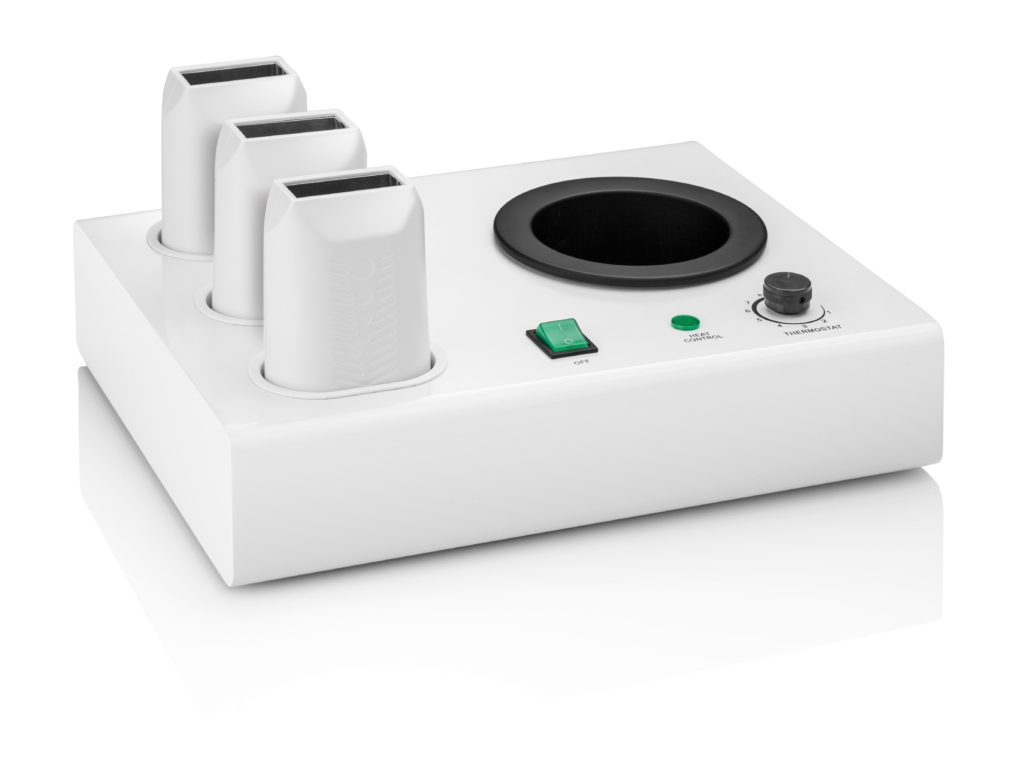
Waxing in a beauty salon rests on three pillars: the right equipment (wax heater, roll-on, strips and spatulas), a strict hygiene protocol (never dip a spatula back into the pot) and post-waxing care that soothes the skin. The choice between strip wax and peelable strip-free wax depends on the treated area and skin type. This guide details the equipment and process for beauty professionals.
What equipment for waxing?
- Wax heater: pot-type for traditional wax, or combined to handle several formats. Temperature control is the key criterion.
- Roll-on: roller cartridge for a fine, even application, fast on large areas.
- Non-woven strips: cut to size depending on the area, for liposoluble wax.
- Disposable wooden spatulas: single use, essential for hygiene.
- Supplies: paper rolls for the bed, gloves, caps and towels.
Strip wax or peelable wax: which to choose?
Liposoluble strip wax is applied in a thin layer and works well on large areas (legs, arms, back): it is fast and economical. Peelable (strip-free) wax, applied thicker and removed by hand once set, is intended for sensitive areas and short or coarse hair (face, underarms, bikini line) because it adheres more to the hair than to the skin.
The waxing protocol step by step
- Prepare the skin: cleanse, dry thoroughly, then apply a light veil of talc to absorb moisture.
- Check the temperature of the wax before any application on the client, following the manufacturer’s instructions.
- Apply in the direction of hair growth, in an even layer.
- Remove against the direction of growth, with a quick movement parallel to the skin, keeping the skin taut with the other hand.
- Soothe immediately with an after-waxing milk or oil.
Hygiene: the never twice in the pot rule
The central rule of waxing is to never dip a spatula that has touched the skin back into the wax pot. Use a new spatula for each scoop, gloves, disposable paper renewed between each client and a disinfected station. See also our hygiene and disinfection guide and our item on disposable supplies.
Post-waxing care
After removal, the skin is sensitised: an after-waxing milk or oil removes wax residue, calms redness and moisturises. Advice to pass on to the client: avoid intense heat, hot baths and sun exposure in the following hours, and do a gentle scrub a few days later to prevent ingrown hairs.
Which equipment for which area?
| Area | Wax type | Equipment |
|---|---|---|
| Legs, arms, back | Liposoluble with strips | Roll-on or pot, strips |
| Bikini line, underarms | Peelable strip-free | Wax heater, spatulas |
| Face, eyebrows | Peelable, fine application | Small spatula, precision |
Contraindications and caution
Some situations require postponing or declining the service: damaged, irritated or sunburnt skin, ongoing dermatological treatment, varicose veins in the area, or any contraindication indicated by the manufacturer of the products used. When in doubt, refer the client to medical advice rather than taking a risk.
FAQ – Waxing in beauty salons
How long should hair be for waxing?
The hair must be long enough for the wax to grip it: too short, it breaks or is not caught. The right length depends on the area and the type of wax used.
Can a spatula be reused?
No. A spatula that has touched the skin must never go back into the pot: it is the basic hygiene rule, along with single use and wearing gloves.
How to limit ingrown hairs?
Correct removal (taut skin, quick parallel movement), suitable post-waxing care and a gentle scrub a few days later reduce the risk.
Equipping your salon? Discover our beauty range or contact Beauty Hair Products.