
Professional hair colour: developers, shade chart and mixing protocol (2026)
Professional hair colour rests on three decisions taken before a tube is even opened: the target depth, the chosen tone and the developer that goes with it. Get one of the three wrong and you end up with a result that is too warm, incomplete grey coverage, or a shade to correct at the next shampoo. This guide works through, step by step, how to read a shade chart, how to choose the developer, the mixing protocol and the mistakes that cost the most at the chair.
How do you read a professional shade chart?
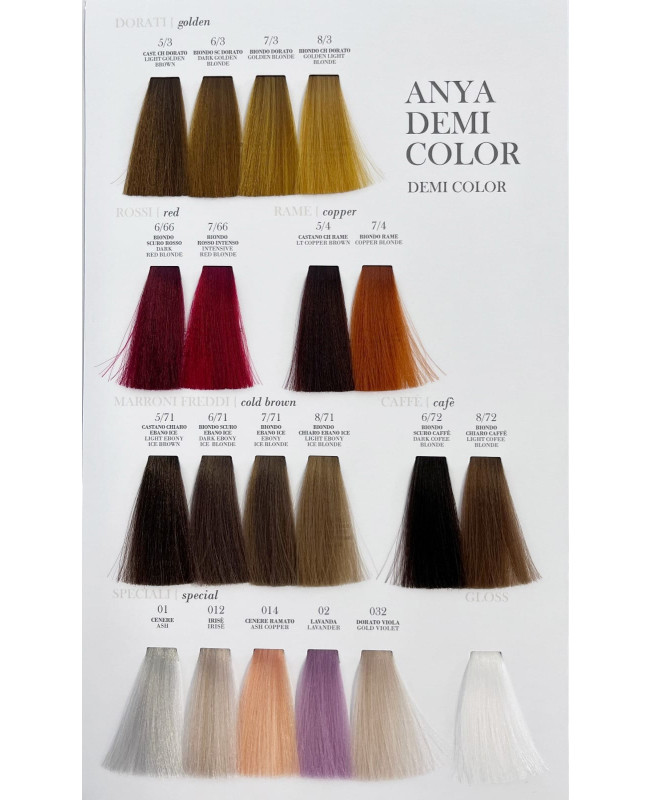
Each shade is written with a digit, a full stop (or comma), then one or two digits. The first digit is the depth, from 1 (black) to 10 (very light blonde). The digits that follow are the tones: the first is dominant, the second secondary. A 7.34 is therefore a golden copper blonde.
| Digit | Tone | What it does |
|---|---|---|
| .0 | Natural | Neutral coverage, no marked tone |
| .1 | Ash | Neutralises orange and gold |
| .2 | Iridescent / violet | Neutralises yellow |
| .3 | Gold | Warms up, brings light |
| .4 | Copper | Deliberate orange tone |
| .5 | Mahogany | Red-violet tone |
| .6 | Red | Straight red tone |
This numbering varies slightly from brand to brand: the manufacturer’s shade chart remains the reference, especially for special series (high lift, grey coverage, fashion shades).
Which developer: 10, 20, 30 or 40 volume?
The developer decides the lifting power. More than the shade itself, it makes the difference between a controlled result and a tone that comes out too light.
| Developer | Concentration | Lift | Typical use |
|---|---|---|---|
| 10 volume | 3 % | None | Tone on tone, depositing a tone, going darker |
| 20 volume | 6 % | 1 to 2 levels | Grey coverage, root retouch |
| 30 volume | 9 % | 2 to 3 levels | Moderate lift on a dark base |
| 40 volume | 12 % | 3 to 4 levels | Strong lift, on healthy hair only |
Simple rule: use the weakest developer that reaches the result. The higher the volume, the more open the fibre and the faster the colour fades. Beyond four levels of difference you are no longer colouring but lightening: the detail is in our guide to blonde and bleaching in the salon.
The mixing protocol, step by step
- Weigh rather than estimate: a scale prevents shade drift from one session to the next. A 1:1 ratio for a classic oxidative colour, 1:1.5 or 1:2 for a tone on tone or a high lift depending on the brand.
- Mix in a non-metal bowl until the texture is smooth and free of lumps.
- Apply straight away: the mix starts to oxidise as soon as it is ready and loses power if it waits.
- Start at the roots on regrowth or grey hair, then move down the lengths towards the end of the development time if they need refreshing.
- Respect the development time given by the brand, usually 30 to 45 minutes. Going longer does not darken further, it damages.
- Emulsify with lukewarm water before rinsing, then a post-colour shampoo and an acidic treatment to close the cuticle.
Permanent, tone on tone or temporary?
- Oxidative colour (permanent): it lifts, covers 100 % of grey hair and leaves a line at the regrowth. The choice for a lasting change.
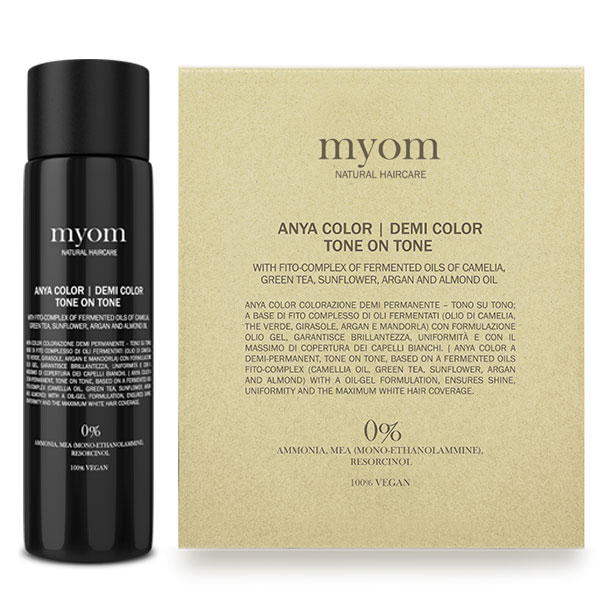
- Tone on tone (demi-permanent): it does not lift, deposits a tone and fades gradually without a hard line. Ideal for reviving, darkening or neutralising.
- Temporary colour: it stays on the surface and washes out in a few shampoos. Useful for testing a shade or helping out before an event.
The consultation to do before any colour
The consultation takes five minutes and prevents most colour accidents:
- Hair history: henna, home colour, keratin straightening or recent bleaching completely change how the fibre reacts.
- Percentage of grey hair and how it is distributed: beyond 50 %, a natural base in the formula is needed for stable coverage.
- Porosity and condition of the fibre: porous hair takes faster and comes out cooler.
- Allergy test 48 hours beforehand for a new client, and a strand test if in doubt.
- Protection: disposable gloves, waterproof gown, dark or disposable towels. See our guide to disposables in the salon.
The most common colouring mistakes
- Choosing the developer out of habit rather than by the number of levels to cross.
- Forgetting to pre-pigment on resistant grey hair or when going back darker.
- Applying to wet hair when the brand specifies dry application: the product dilutes and the result becomes uneven.
- Neglecting to neutralise warm tones after lifting.
- Not writing the exact formula on the client record: impossible to reproduce or correct at the next appointment.
The colouring equipment to keep at the station
A complete technical station needs few items: precision scale, bowls and application brushes, weaving comb, sectioning clips, disposable gloves, timer, gown and towels dedicated to technical work. A tidy station saves several minutes per client and prevents failed mixes. On hygiene, everything that touches the client is cleaned and disinfected between clients: our hygiene and disinfection protocol sets out the procedure.
Client record and strand test before a professional colour
A successful professional colour is prepared on paper before it is prepared in the bowl. The client record is the tool that lets you reproduce a result, correct it, or simply explain it three months later. Without it, every appointment starts from zero and the risk of error rises each time.
At every session, note the information that really changes the result:
- the date, brand and exact reference of the shade used;
- the developer chosen and the mixing ratio given by the manufacturer;
- the development time applied and the starting area;
- the condition of the fibre observed: porosity, sensitised lengths, length of regrowth;
- the history declared: home colour, henna, straightening, bleaching;
- the client’s feedback on the tone achieved and on how it held between appointments.
The strand test remains the only honest way to validate a formula on hair you do not yet know. It is required as soon as a doubt appears: unclear history, very porous lengths, an already coloured base, an unidentified home product. Take a discreet strand low down, apply the intended formula, follow the manufacturer’s instructions, then judge the result before treating the whole head.
The skin allergy test also follows the product instructions. Each brand specifies the interval to respect before application and the procedure to follow. These instructions cannot be improvised and do not transfer from one range to another. In professional colouring the rule fits in one sentence: the manufacturer’s instructions govern, including mixing ratios and timings.
Grey coverage: adapting the formula
Grey coverage is the most frequent request in professional colouring, and the one that forgives approximation least. A white hair is not a light hair, it is a hair without pigment. It is often thicker, more resistant and less porous, which is why it takes colour less easily. The structure of the hair explains this difference in behaviour between a pigmented fibre and one that no longer is.
First step: estimate the proportion of grey area by area. The temples, the parting and the crown are almost never at the same stage. An even colour starts with that reading, not with the choice of tone.
| Proportion of grey | What you see at the chair | Formulation approach |
|---|---|---|
| Under 30 % | Scattered greys, mainly at the temples | Fashion shade possible, natural base added as per instructions |
| 30 to 50 % | Parting and front clearly marked | Larger share of natural base in the mix |
| 50 to 70 % | Front and crown visibly light | Natural base often dominant, tone placed second |
| Over 70 % | Almost entirely white hair | Formula built around the natural base, strand test recommended |
The general logic is known to every colourist: the higher the proportion of grey, the more natural base the formula needs so that the tone has something to hold onto. The exact proportions belong to each range and appear in the manufacturer’s shade chart. Never transfer a rule learned on one brand to the next.
Two situations deserve particular care. First, very resistant greys, often at the front, which stay translucent despite correct application: several ranges offer dedicated series with their own instructions. Second, red and copper tones on a dark base that is heavily grey, where pre-pigmentation comes into play. In both cases the strand test and the instructions decide, not habit.
A practical point for any professional colour: start the application in the area where the grey is densest. It needs the full development time set by the manufacturer, while the less affected areas follow.
Roots and lengths: two areas to treat separately
Regrowth and previously coloured lengths do not react the same way. Regrowth is virgin fibre, pigmented and not very porous. The lengths have already had one or more applications and absorb faster. Applying the same mix everywhere, for the same length of time, remains the mistake that produces the most corrections.
Two classic consequences then appear: a root lighter than the rest, the halo effect, when scalp heat speeds up the reaction; and lengths that darken appointment after appointment through pigment build-up. A well-run colour avoids both by treating each area for what it is.
| Area | Objective | Approach | Watch out for |
|---|---|---|---|
| Regrowth | Match the depth and cover the grey | Full formula, development time set by the manufacturer | Do not overlap onto existing colour |
| Lengths | Revive the tone and even it out | Refresh towards the end of development, often tone on tone | Uneven porosity, ends that saturate |
The method that limits variation is always the same. Divide the head into four clean quadrants. Take fine, regular sections. Start in the most resistant or greyest area. Work quickly and neatly so the time gap between the first and last section stays small. Consistency of application counts as much as the formula itself.
To refresh the lengths, many salons apply a tone on tone towards the end of development, for a short time. The aim is not to re-colour but to give back depth and tone. Here too, possible dilutions and timings depend on the range: follow the instructions rather than a recipe heard at a course ten years ago.
Toning, gloss and unwanted tones
In professional colouring, neutralising a tone means applying the opposite colour on the colour wheel. Violet corrects yellow, blue corrects orange, green corrects red. That rule does not change, but applying it takes restraint: too much corrector gives a dull or grey result.
Toner and gloss answer two neighbouring needs.
- A toner adjusts the tone after lifting or bleaching. It goes on a stabilised base, with a low-volume developer, following the instructions of the range in use.
- A gloss mainly brings shine and a light tone. It also serves between appointments to extend a colour that is starting to fade.
Three precautions apply to both. Check visually throughout the development. Rinse as soon as the target tone is reached. Never exceed the time given by the manufacturer. On very porous ends, violet and blue pigments grab quickly and unevenly: a strand test avoids the nasty surprise.
Also ask the client about their environment. Hard water, swimming pools or strong sun change the tone between appointments. A greenish cast after the summer is not always a colouring error: sometimes it is the chlorine and copper in the water. Diagnose before correcting, never the other way round.
Colour longevity: the aftercare advice to give clients
How long a professional colour lasts is decided half at the chair and half at home. A client who washes their hair in scalding water with an unsuitable shampoo will lose the tone in three weeks, whatever the quality of the work done in the salon. The hairdresser’s job does not end at the rinse: explaining aftercare is part of the service.
Always give the same simple, memorable pointers after a colour:
- wait before the first shampoo, according to the interval given by the brand used;
- choose a shampoo suited to coloured hair, without harsh cleansing agents;
- rinse with lukewarm rather than hot water, the cuticle stays closed and the tone holds better;
- apply a mask or a professional treatment once or twice a week on the lengths;
- use a heat protectant before the dryer or the iron;
- protect the colour from the sun in summer and rinse the hair straight after the pool.
Product advice works better in writing. Hand over a small routine card with two items at most and how often to use them. Two well-explained products get bought and used; five products listed in passing end up in a cupboard. Our guide to professional shampoo covers the formula families and their uses.
Also suggest a pigmented home treatment when the tone is fragile, for instance on a cool blonde. It spaces out appointments without replacing them, and it stops the client looking for a supermarket solution. A properly maintained colour comes back to the salon at the right moment, not as an emergency.
Stock, pricing and how long a professional colour takes
The colour stock is the least visible part of professional colouring, and often the most expensive. Badly managed, it ties up cash and wastes time at the chair. A few principles are enough to keep the store under control.
- Work with one main range. Mixing systems from several brands complicates formulation and multiplies dormant items.
- Keep depth in naturals, ashes and your best-selling bases. They are the ones that turn over.
- Order fashion shades individually, against confirmed appointments.
- Apply first in, first out, and check expiry dates on every delivery.
- Count your tubes once a month and record usage by shade. Within three months you will know exactly what to order.
- Plan for more 20 volume developer than the others: it is the one that goes fastest.
Our technical products cover the consumables that go with colouring every day: bowls, brushes, gloves, papers and measuring accessories.
On pricing, the differences between cantons, between town and country and by salon positioning are real. The ranges below are a basis for discussion, not a price list. Trade bodies such as Coiffure Suisse publish useful benchmarks for positioning a salon.
| Service | Indicative duration | Indicative client budget (CHF) |
|---|---|---|
| Root retouch | 45 to 75 min | 60 to 110 |
| Full colour, mid-length hair | 75 to 120 min | 90 to 160 |
| Tone on tone or gloss | 30 to 50 min | 50 to 90 |
| Toner after lifting | 20 to 40 min | 40 to 80 |
| Colour, cut and blow-dry | 2 to 3 hrs | 140 to 240 |
To set the price of a professional colour, start from the real material cost, add the chair time, then the salon’s share of fixed costs. A tube, a developer, the consumables and the finishing treatment often come to a few francs per service: it is the time that weighs most. A colour billed without counting the twenty minutes of preparation and cleaning is not profitable, even at a price that looks right on paper.
FAQ – Professional hair colour
Which developer for covering grey?
A 20 volume (6 %) combined with a natural base in the formula. That is the setting that gives the best coverage without needlessly lifting the base.
Can you lighten colour with more colour?
No. Colour does not lift colour that is already on the hair: you have to go through bleaching or colour removal, then apply the shade you want.
How often should colour be redone?
Generally every 4 to 6 weeks for a root retouch. Between retouches, a treatment or a tone on tone is enough to revive the colour on the lengths.
Is a strand test needed before every professional colour?
Not systematically on a known client whose formula does not change. It becomes essential as soon as the history is uncertain, the fibre very porous, a home product has been used, or you change range. The manufacturer’s instructions also specify the cases where it is expressly required.
How do you correct a tone that is too coppery?
Neutralise with the opposite colour, so a blue or ash corrector, dosed with restraint and checked visually during development. A strand test is strongly advised before application. If the base is already heavily lifted, a light toner is often safer than a new colour.
What is the difference between a toner and a gloss?
A toner adjusts a tone after lifting. A gloss aims first at shine and a discreet tone, without changing the depth. Both fade with shampooing, at a rate that depends heavily on the porosity of the lengths.
How long does a professional colour appointment take?
Allow 45 to 75 minutes for a root retouch and up to three hours for a full colour with cut and blow-dry. The time depends on length, density, the number of areas to treat and the development time set by the manufacturer.
Can you colour hair treated with henna or home colour?
It is possible, but never blind. These products leave deposits that react unpredictably. A strand test is then unavoidable, and it is better to say up front that a gradual result over several appointments may be needed. A controlled result is worth more than a half-kept promise.
The short version
A reliable professional colour rests on a short chain: a written consultation, a formula chosen from the shade chart of the range in use, a developer consistent with the objective, an even application and a rinse at the right moment. The strand test and the manufacturer’s instructions frame each of those steps.
The rest is organisation. An up-to-date client record, stock reviewed monthly, prices that include real chair time, and aftercare advice given in writing: these habits are what make professional colouring profitable and repeatable. They are the difference between a salon that suffers its corrections and one that avoids them. Before your next colour order, start from your actual usage over the last three months rather than a theoretical list.
Restocking your technical shelf? Discover our technical products range or contact Beauty Hair Products.